Iskender Kebab at Home (Yes, You Can)
Iskender is one of Turkey's most famous dishes — and one of the hardest to do at home, because most of us don't have a vertical rotating spit. Here's the cheat that works.

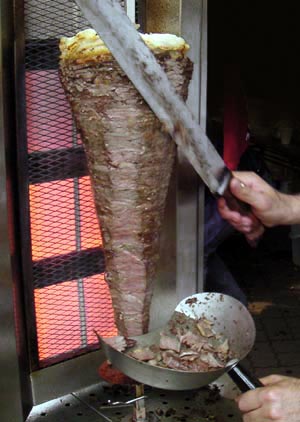
The honest truth about Iskender at home: you cannot make döner (vertical-rotating-grilled lamb) without a vertical rotating spit. The texture of properly grilled döner — thin shavings of layered marinated meat, edges crispy from the heat, interior tender — comes from a specific tool that almost no home cook owns.
But you can make an excellent Iskender at home using a substitute method. We've tested seven techniques and the one that comes closest is a thinly sliced, marinated, pan-seared shoulder of lamb. Not identical to döner, but close enough that a Turkish friend told us, kindly, that it "would do in a pinch."
The pour at the table is the show. The sizzle of foaming brown butter is the whole point.
Ingredients (serves 4)
Meat
- 600g lamb shoulder, sliced very thin (against the grain, 3mm slices — your butcher can do this for you, or freeze for 90 minutes and slice yourself)
- 2 tablespoons olive oil
- 3 tablespoons yogurt
- 1 tablespoon tomato paste
- 1 teaspoon ground cumin
- 1 teaspoon Aleppo pepper
- 1 teaspoon paprika
- 2 garlic cloves, grated
- 1 teaspoon salt
- ½ teaspoon black pepper
Bread base
- 1 large pide or two thick pita breads, cubed into 2cm pieces
- 30g butter, melted
Sauce
- 400g tomato passata (or 1 can of crushed tomatoes, blended smooth)
- 40g butter
- ½ teaspoon salt
- ¼ teaspoon sugar
To serve
- 200g thick Turkish-style yogurt (or strained Greek yogurt)
- 40g butter, for finishing
- Aleppo pepper, for garnish
- A few sprigs of parsley
Method
1. Marinate the lamb. Combine olive oil, yogurt, tomato paste, cumin, Aleppo pepper, paprika, garlic, salt, and black pepper in a bowl. Add the sliced lamb and toss to coat every piece. Marinate at least 2 hours, ideally overnight.
2. Make the tomato sauce. Bring the passata to a simmer in a small saucepan over medium heat. Add salt and sugar. Reduce to a sauce thick enough to coat the back of a spoon, about 10 minutes. Stir in 40g butter and remove from heat. Keep warm.
3. Toast the bread cubes. Toss the cubed pide with the melted butter and toast in a 200°C oven for 5–8 minutes until lightly crisp on the outside but still soft in the middle. Don't dry them out — they need to absorb sauce later.
4. Sear the lamb. Heat a heavy skillet (cast iron) over high heat. When extremely hot, add the lamb in small batches — don't crowd the pan. Sear about 60–90 seconds per side, until well-browned and just cooked through. Transfer to a plate as each batch finishes.
5. Assemble. On a serving plate, spread the toasted pide cubes in a layer. Top with the seared lamb slices. Ladle the hot tomato sauce over everything. Spoon thick yogurt to one side of the plate.
6. The butter pour. Melt the final 40g of butter in a small pan over high heat until it foams and turns golden brown — about 90 seconds. Bring the pan to the table. Pour the foaming butter over the plate at the moment of serving. The sizzle is the whole point.
7. Garnish. Sprinkle Aleppo pepper over the top. Add a few sprigs of parsley. Serve immediately.
What to look for
- Steam visible when the plate is brought to the table
- Hot butter still foaming as it hits the plate
- The pide cubes have absorbed sauce but haven't dissolved
- The yogurt is cold against the hot meat — this contrast is essential
- The lamb is just cooked through, still juicy, not dry
Mistakes to avoid
Overcooking the lamb. Thin slices need 60–90 seconds per side, max. If you cook them longer they go from tender to leathery quickly.
Skipping the brown butter. The brown butter poured at the table is, weirdly, the most important component. Without it, the plate is fine. With it, it's transformative.
Using Greek yogurt without straining it. Greek yogurt is closer to Turkish yogurt than regular yogurt, but is still slightly less thick. If yours is runny, drain it through cheesecloth for an hour first.
Letting the bread get soggy before serving. Toast the bread last, just before assembly.
Pouring the butter in the kitchen. The pour at the table is the show. Don't deprive your guests of it.
What to serve with it
- Çoban salatası — diced cucumber, tomato, parsley, lemon
- A glass of ayran — the traditional pairing
- Pickled vegetables, for sharpness
Skip dessert for this meal — the plate is rich enough that you'll be full. A small Turkish coffee at the end is right.